Valentino Signature Bags Wardrobe Staple Bag
Why That Second Word on Your Valentino Bag Is Garavani
Look inside a Valentino bag and the tag gives you two words where one seemed likely: VALENTINO and GARAVANI, in capitals, above MADE IN ITALY. That second word is usually read as a flourish, a founder’s signature added for prestige, or a sign of some particular sub-line. It is none of those. A contract signed in 1979 requires GARAVANI to be there, which is also why the word appears throughout the advertising for the house’s leather goods. Understanding the reason turns a piece of trivia into the single most useful check a buyer can make. What follows explains where the word comes from, what it guarantees and what it does not.
The short answer
Because another company holds overlapping rights to the word Valentino on handbags in the United States, the Roman couture house agreed decades ago to add its founder’s surname and stay distinguishable. That other company is Mario Valentino S.p.A., founded in Naples in 1952, a leather goods and footwear business with no connection to the couture house founded in Rome in 1960. Mario Valentino states it has held the American trademark Valentino for handbags and leather goods since 26 April 1971, and that senior-rights position is corroborated in legal reporting. In 1979 a coexistence agreement divided the marks between the two businesses; among its terms is one obliging Valentino S.p.A. to use GARAVANI alongside VALENTINO on leather goods and in the advertising for them. What sits on your bag, then, is a legal obligation carried out in stamped capitals. Everything else here is detail hanging off that one fact.
The man whose surname it is
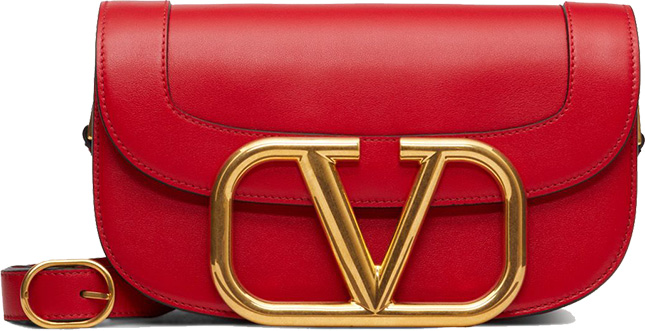
Valentino Garavani founded the house in Rome in 1960 with Giancarlo Giammetti, opening the first atelier on Via Condotti. For close to five decades he designed under his own name, retiring from design in 2007 and showing his final couture collection in January 2008. Having sold the company in 1998, he no longer owned the business carrying his name by the time valentino small crossbody bag he stepped back. He died on 19 January 2026, aged 93. None of the bags in the current collection were designed by him, and nor was anything made in the past two decades. The tag’s surname records the founder of the house and tells you nothing about who works there today.
The 1979 agreement and the case that put it to the test
The two companies settled their overlap privately rather than in court, and the coexistence agreement they signed in 1979 remains the governing document. It cuts in both directions, giving each business a defined set of permissions and a defined set of limits. Decades later the arrangement was tested in an American court: Valentino S.p.A. filed suit against Mario Valentino in July 2019 in the Central District of California, docketed 2:19-cv-6306, alleging false advertising, unfair competition and breach of the coexistence agreement. Mario Valentino’s counterclaims were dismissed in April 2021, and the case settled and was dismissed without prejudice on 14 June 2024, with terms never disclosed. Because it ended without prejudice either side may bring the matter back, and reporting indicates further proceedings, including arbitrations, remained live in Italy. No wrongdoing was established against either company and none is alleged here, because this is a trademark boundary between two legitimate businesses.
What the Naples company may do
The agreement permits Mario Valentino to trade under several forms of the name. On the exterior of its products it may use Mario Valentino, M. Valentino, Valentino, MV or V. The condition attached is that the full name Mario Valentino must appear inside the item and on its packaging, so the maker stays identifiable to anyone who opens the bag. The company may not combine V and Valentino together on leather goods. The products are genuine goods from a genuine Italian house, sitting at a different price point and moving through different channels than the couture house uses. Claims the company makes about inventing the stiletto heel and the women’s moccasin are self-description rather than independently verified history, and are best read that way.
What the Roman house must do
Running the other way, the obligation is narrower and far more visible. For leather goods and their advertising, Valentino S.p.A. uses the mark VALENTINO GARAVANI rather than VALENTINO alone. That is why the accessories line is named the way it is, why the interior tag carries both words, and why the house’s own product pages for bags use the longer form consistently. The requirement does not reach every category identically, and that is why ready-to-wear can be presented as Valentino or Maison Valentino. In practical terms for a buyer, the effect is simple: the longer name on a bag is the expected, compliant form, and its absence on something sold as couture-house merchandise deserves a second look. Boring, contractual and enormously useful is what the rule is.
One company, two names
People commonly misread Valentino Garavani as a sub-brand, a diffusion line or a lower tier within the same company. It is not. Valentino Garavani is the naming convention for accessories, Valentino and Maison Valentino the ones for ready-to-wear, and all of it comes from one company applying one set of standards. A Rockstud crossbody bag and a couture gown are equally the work of the same house, and only the wording on the label differs, for the contractual reason set out above. Creative direction has passed from Pierpaolo Piccioli to Alessandro Michele, who has led the house since 2024 according to the most recent confirmable reporting. On the ownership side, Mayhoola for Investments holds seventy per cent and Kering thirty per cent, the Kering stake acquired in July 2023 with a stated intention to take full ownership by 2028. The accessories carrying the longer name were observed in 2026 at market prices from about $650 for a VLogo Signature clutch to $7,900 for an embroidered Panthea, all made in Italy, and Rebag’s data puts average resale retention for the house near 41 per cent, with hero styles between 50 and 58 per cent.
What the word guarantees and what it does not
A tag reading GARAVANI identifies which company made the bag. It does not by itself prove the bag is authentic, because counterfeiters copy tags as readily as they copy studs. The checks that count are physical ones: capitals in a consistent font weight, evenly pressed stamping without smudging, a tag sewn down on all four sides, engraved rather than printed hardware logos, square zip pulls with rounded edges and deep engraving, uniform pyramid studs at even spacing, and stitching of consistent density. Usually a serial number sits on a tag inside an interior pocket, often black, cream or light brown; not every bag has one, older pieces frequently do not, and a missing serial proves nothing on its own. No date-code system exists on these bags at all, and any guide that claims to decode a production date from the digits is inventing it. The authenticity card is reported to carry the model specification, the serial and Made in Italy, with the serial matching the interior tag, though the description comes from resale and authentication practice rather than an official brand statement, and pre-owned bags frequently arrive without one.
| What is in front of you | What it tells you |
|---|---|
| Both VALENTINO and GARAVANI on the interior tag | Made by the Roman couture house, exactly as its 1979 obligation requires |
| Valentino on the exterior, Mario Valentino inside or on the packaging | A real bag from the separate Naples company |
| The interior tag carries no serial number | Seen on older pieces, and not proof of a fake on its own |
| A supposed date code | There is no such system for these bags |
| A pre-owned bag arriving without an authenticity card | Common: cards are often lost or never passed on |
How to read a listing before you buy
The description, not the bag, is where most mistakes happen. A resale listing headed simply Valentino bag says nothing about which company made it, and sellers abbreviate constantly, sometimes without realising there is anything to abbreviate. Ask for a clear photograph of the interior tag before agreeing a price, and believe the tag rather than the title. If you are shopping new, buy from the house’s own boutiques and webstore, or from named authorised retailers such as Neiman Marcus, Bergdorf Goodman, Saks Fifth Avenue, Nordstrom, Mytheresa, Farfetch, Selfridges or Harrods, where the question never arises. If you are browsing a Valentino bag sale at an American off-price chain, expect Valentino by Mario Valentino, since that is what those chains’ own brand filters list. One word on a tag settles all of it, which is exactly why it is worth knowing how the word got there.
